Philippine Immigration Interview (Tourists): Common Questions + Best Answers (2026)
Prepare for Philippine airport immigration with a simple answer framework, realistic sample answers, and a document checklist that matches what officers verify for tourists and visitors.
LipadNa Team
Travel Safety Experts
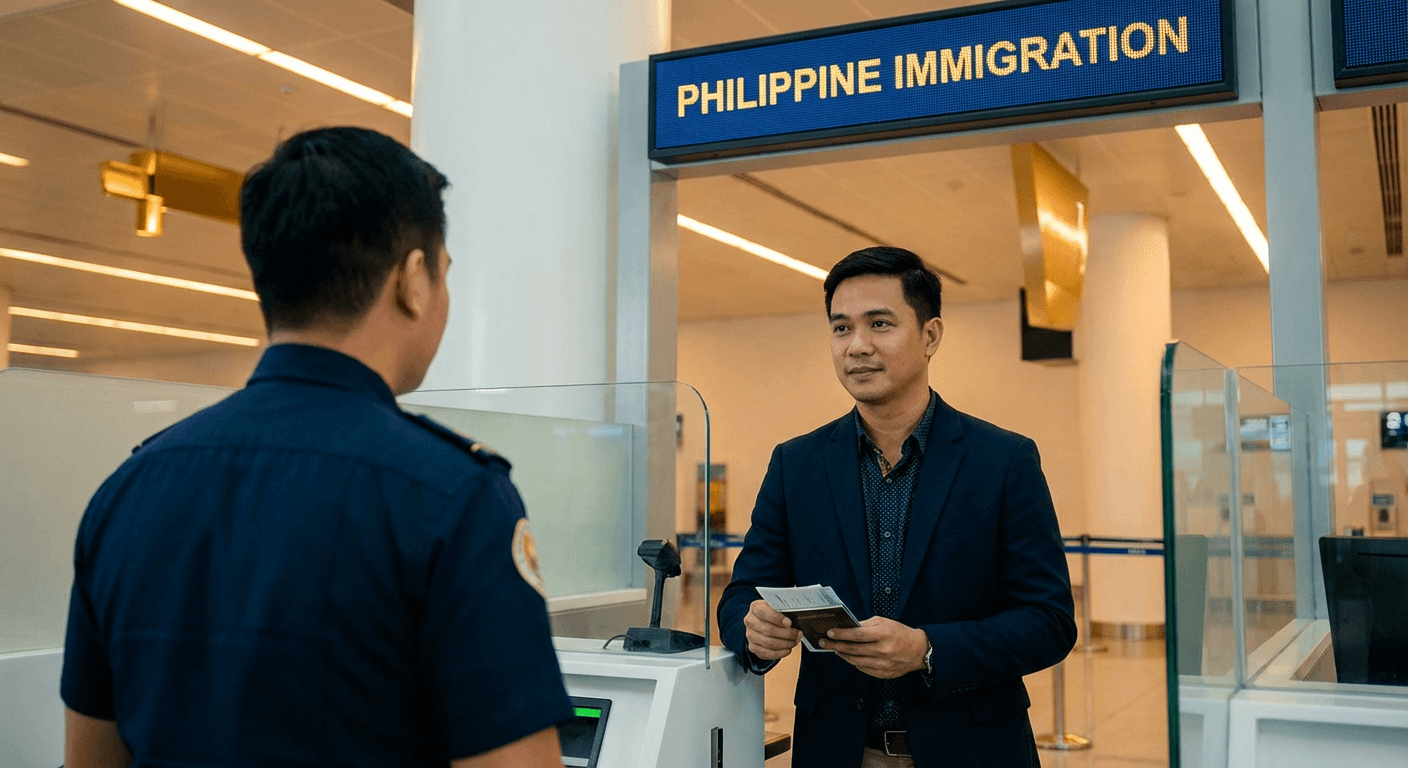
The immigration interview at Philippine airports can feel intimidating—especially for tourists, first-time travelers, and people traveling with a sponsor. What helps most is not “confidence,” but consistency: your answers should match your documents and your travel plan.
The simple answer framework (use this for almost any question)
Aim for one clear sentence that covers:
- Where you’re going (city + country)
- When (dates)
- Why (tourism / visit / event)
- Where staying (hotel/host)
- How funded (self/sponsor)
- Return (return ticket + ties to PH)
"I’m going to Seoul from Feb 10 to 16 for tourism. I’m staying at [hotel], self-funded from my salary, and my return flight is on Feb 16."
Why Immigration Officers Interview Travelers
Immigration officers have a crucial job: preventing human trafficking, illegal recruitment, and visa fraud. Their questions are designed to:
- Verify travel intentions
- Confirm financial capability
- Identify potential victims
- Detect fraudulent travel
Common interview questions (with best answers)
Question 1: "Where are you going?"
Best answer: State the destination city and country."I'm going to Tokyo, Japan for a vacation."
Avoid: Vague answers like "abroad" or "Asia."Question 2: "How long will you stay?"
Best answer: Give specific dates that match your ticket."I'll be there for 7 days, from January 15 to 22."
Avoid: Inconsistency with your ticket dates.Question 3: "What's the purpose of your trip?"
Best answer: Be specific and match your visa type.- Tourism: "Sightseeing and trying local food"
- Business: "Attending a conference at [venue name]"
- Visiting family: "Visiting my aunt who lives in [city]"
Question 4: "Where will you stay?"
Best answer: Name specific hotels or addresses."I'm staying at the Marriott Hotel in Shibuya for the first 4 nights, then at an Airbnb in Osaka."
Avoid: "I'll figure it out when I get there."Question 5: "Who's paying for your trip?"
Best answer: Be honest and have proof ready.- Self-funded: "I saved up from my salary. I can show you my bank statements."
- Sponsored: "My brother who works in [country] is sponsoring me. I have his invitation letter and his employment proof."
Question 6: "Is this your first time traveling abroad?"
Best answer: Be honest.If yes: "Yes, this is my first international trip. I'm excited but also prepared. I have all my documents here."
Tip: First-timers should bring extra documentation.Question 7: "What do you do for a living?"
Best answer: Be specific about your employment."I'm a software developer at [company name]. I've been working there for 3 years."
Have ready: Company ID, certificate of employment, recent payslips.Question 8: "How much money are you bringing?"
Best answer: Know your budget and show proof."I have PHP 80,000 in savings for this trip, plus my credit card with a 100,000 limit."
Questions that often trigger extra screening (prepare proof)
If any of these apply, bring stronger supporting documents:
- You’re traveling solo to a destination with high scrutiny
- Your trip is long for a tourist profile
- You’re sponsored by someone you recently met or can’t clearly explain
- Your passport is new and you have little travel history
- Your itinerary is unclear (no hotels, no plan, no return ticket)
Red Flags That Trigger More Questions
Avoid these behaviors:
Body Language Tips
- Maintain eye contact
- Stand/sit confidently
- Don't fidget
- Speak clearly and at normal pace
- Smile appropriately
Document checklist (tourists and visitors)
At minimum, have:
- Passport + visa (if required)
- Return/onward ticket
- Hotel bookings or host address
- Itinerary (simple is fine)
- Proof of funds (bank statement/certificate + cards)
- Proof of employment/ties (COE, ID, leave approval)
Document organization (make it easy for the officer)
Have these ready in order:
Practice with LipadNa
Our Interview Simulator tool helps you practice common immigration questions. You'll get:
- Real interview scenarios
- Feedback on your answers
- Tips for improvement
- Confidence building
What If You Get Selected for Secondary Inspection?
Sometimes you'll be taken to a separate area for more questions. This doesn't mean you'll be offloaded. Stay calm and:
Conclusion
Immigration interviews don’t have to be stressful. If you can state your plan clearly and back it with documents, you’re already ahead. If you want a guided checklist and practice questions, LipadNa can help you prepare before travel day.
Safe travels!
Topics
Ready to Check Your Offloading Risk?
Get a personalized risk assessment and know exactly what documents you need before your trip.
Get Free AssessmentRelated Articles
How to Avoid Offloading at Philippine Immigration (2026): Documents + Interview Tips
A practical 2026 guide to avoid being offloaded in NAIA/PH airports: the exact documents to prepare, how to answer immigration questions, and what to do if you’re sent to secondary inspection.
OFW GuideFirst-Time OFW Guide (2026): DMW/OEC, PDOS, and Airport Immigration Checklist
A step-by-step 2026 guide for first-time OFWs: what to complete with DMW (formerly POEA), how to secure your OEC/exit clearance, the documents to bring, and how to pass airport immigration screening.
Travel TipsDocuments Needed to Travel Abroad from the Philippines (2026): Complete Checklist
A complete 2026 checklist of documents for Filipino travelers—tourists, OFWs, business travelers, students, and minors—organized by what immigration typically verifies at the airport.